

Basics
The salary calculation in the program is a flexibly configurable form of calculation, separately for each employee, consisting of payroll pay items. For each pay item, you can use preset formulas or fixed amounts.
For one calculation period, it is recommended to create one payroll run, which includes all employees receiving salary in that period.
The employee's "gross pay" amount, rate type (flat or hourly), as well as the first work day can be set in the employee's card in the "Payroll" section.
The list of all employees is available in the My Paytraq -> Employees section.
If the employee's gross salary is not specified in the employee card, it can also be set in the first salary calculation as a fixed amount.
Create a New Payroll Run
Payroll calculations are created in the section Accounting -> Payroll.
A new calculation can be created using one of the methods described below.
Creating a Payroll Run Without Previous Data
This method is suitable if you are starting a payroll calculation for the first time or wish to enter all data manually.
1) Click the "Create new pay run" button.

2) In the pop-up window, select the "Pay Run Period" (monthly, weekly, or other) for which the calculation is being made.
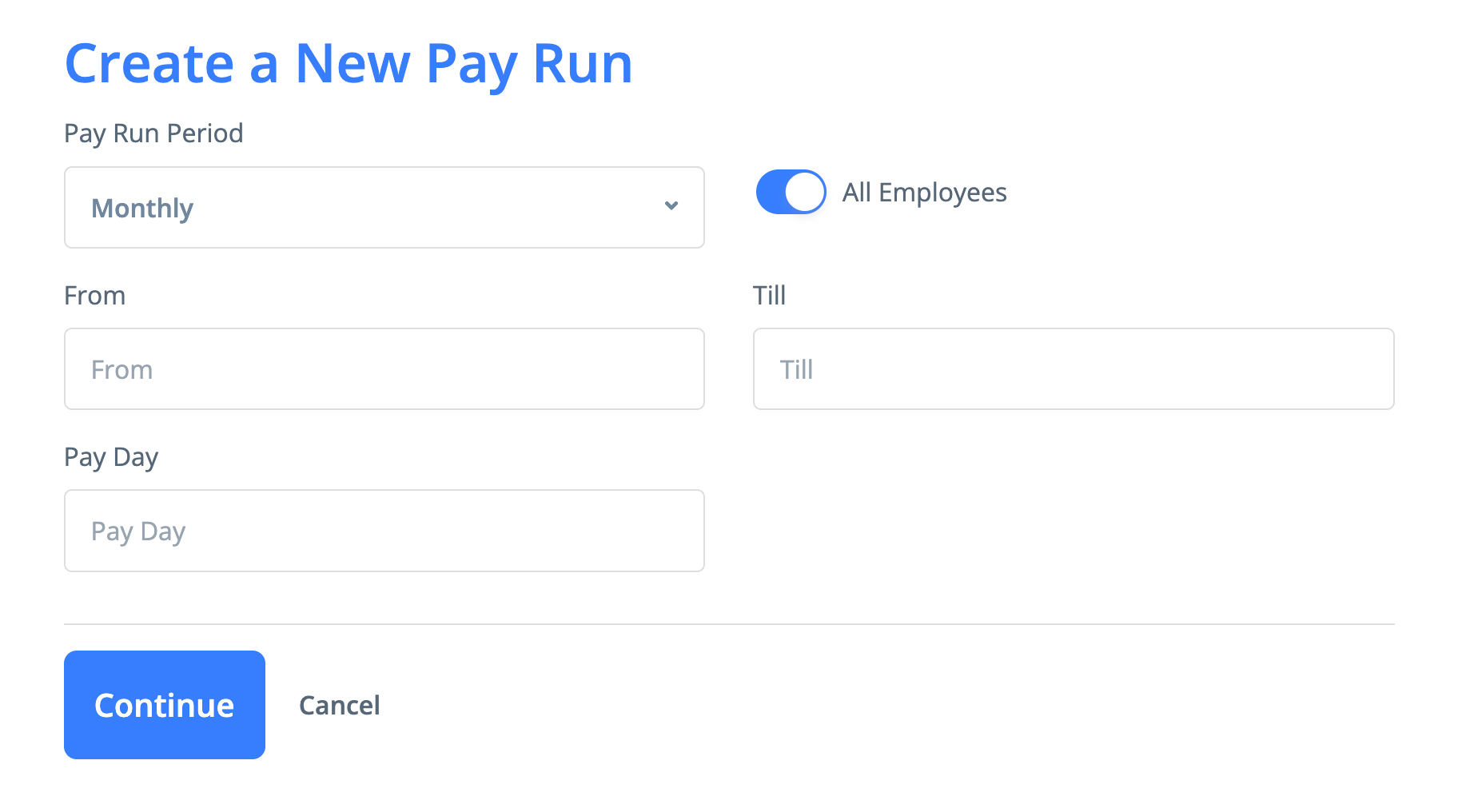
3) By default, the "All employees" checkbox is enabled – in this case, the system will create draft calculations for all employees with an "Active" status in their employee profile. If you uncheck this box, you will be able to select a specific employee for whom the calculation will be created (or create a new employee).
4) Click "Continue" – individual draft calculations will be generated for each employee.
Calculations will be created using the payroll pay items marked as "Default" in the settings. These calculations will have a Draft status, and you can proceed to fill them in.
Creating a Payroll Run by Copying a Previous One
This is the most efficient way to create payroll calculations; it saves significant time because the data and formulas previously used are preserved during the copying process.
1) Go to the "Payroll Runs" tab.
2) Open the most recent payroll calculation.
3) Within the calculation form, click "Copy".
4) In the window that appears, specify the "Pay Day" for the new calculation. After clicking "Copy," individual draft calculations will be generated for each employee included in the run.
The calculations will have a Draft status, and you can proceed to edit them.
Switching Between Employees Within a Payroll Run
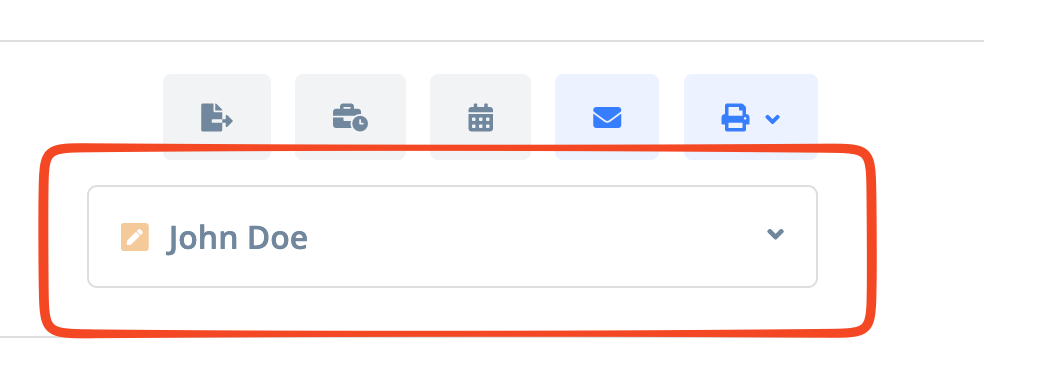
You can switch between individual employee calculations by selecting the desired employee from the list of those added to the payroll run for the period.
An orange color of the icon next to the employee's name indicates that the calculation for this employee is in draft status
Adding a New Employee to a Copied Payroll Run
If a new employee has been added to the system since the last payroll run, they will not be automatically included in a copied calculation. To add them:
1) In the new calculation, click the "Add Employee" button.
2) In the pop-up window, select the employee who is not yet included in this run.
3) Click the "Add" button.
A draft calculation will be created for them, and you can then proceed to edit it.
Removing an Employee from a Calculation
If you need to remove an individual employee from the pay run, click the "Remove Employee from Payroll" button within their payroll form.
Editing a Payroll Calculation
Payroll calculations are edited and posted individually for each employee. The calculation is based on the payroll pay items included in the form.
Calendar
The holiday calendar is accessible on the payroll page by clicking the calendar icon.
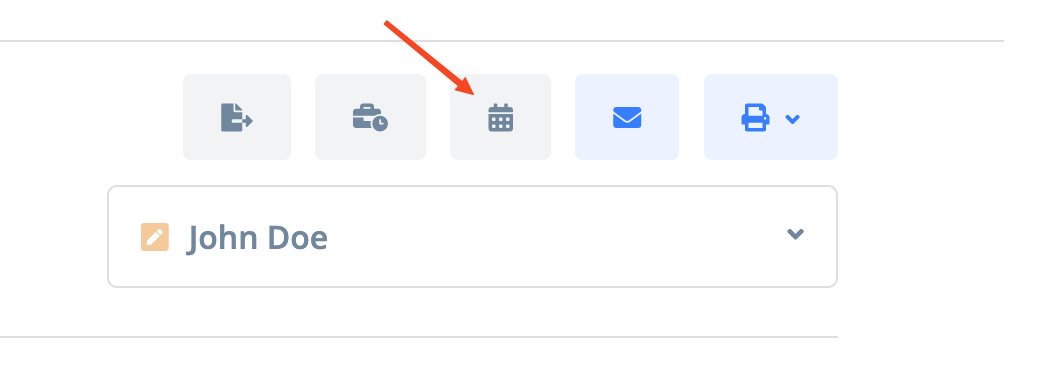
All major public holidays are pre-filled by default; however, you can make necessary adjustments if needed (for example, in the event of official holiday shifts).
Changes made to the calendar are applied to all employees.
Timesheet
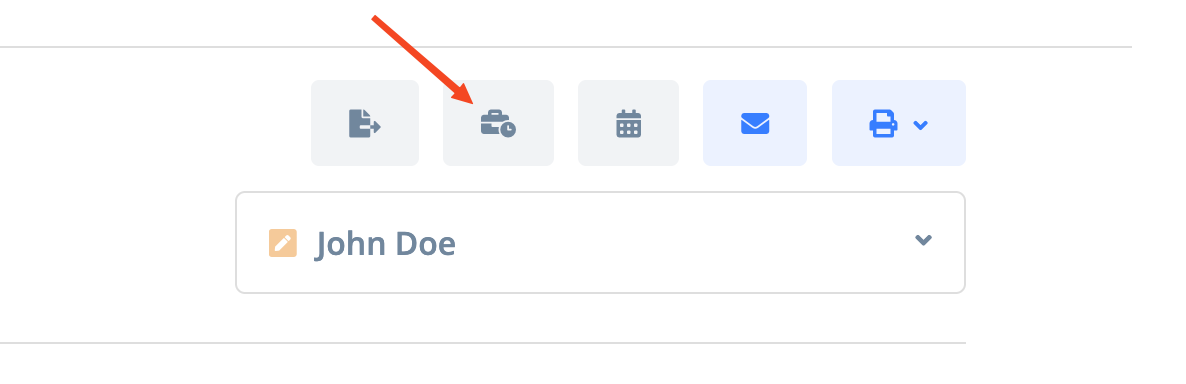
The timesheet can be filled with either the number of hours worked or a specific event code (e.g., annual leave, sick pay, absence) for each individual day. Using the autofill option, you can populate all dates for a given period with the same number of hours or event code simultaneously. Event codes are user-defined. It is recommended to consistently use the same code for the same type of event.
An individual employee's timesheet is available on their specific payroll calculation page under the corresponding section.
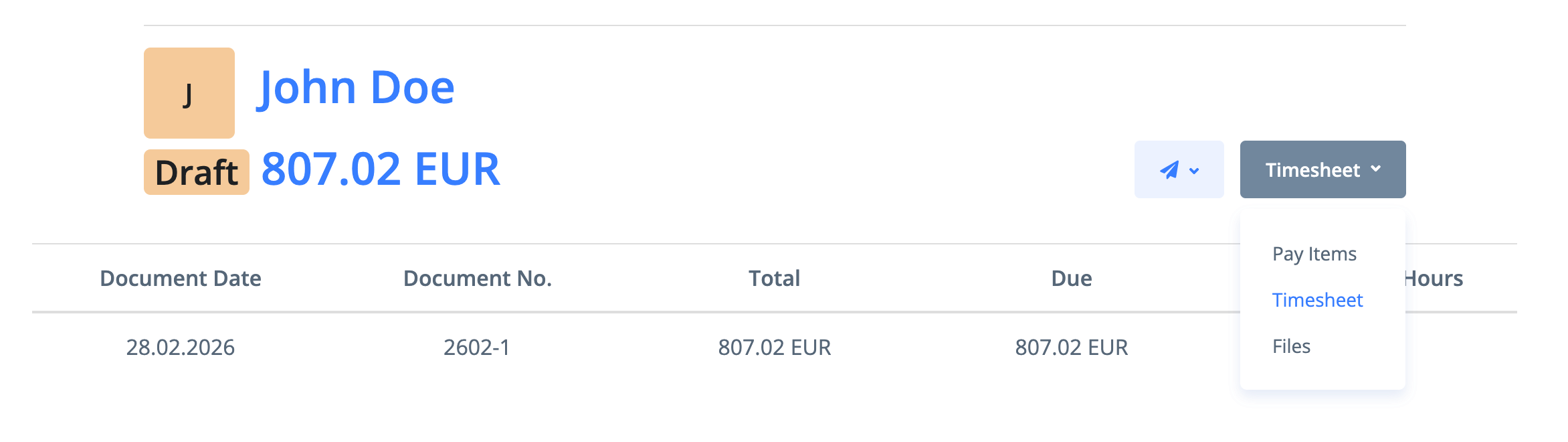
Timesheets for all employees can be uploaded at once via CSV by clicking the import icon.
The total number of working hours from the timesheet is displayed in the header of the employee's payroll calculation page.
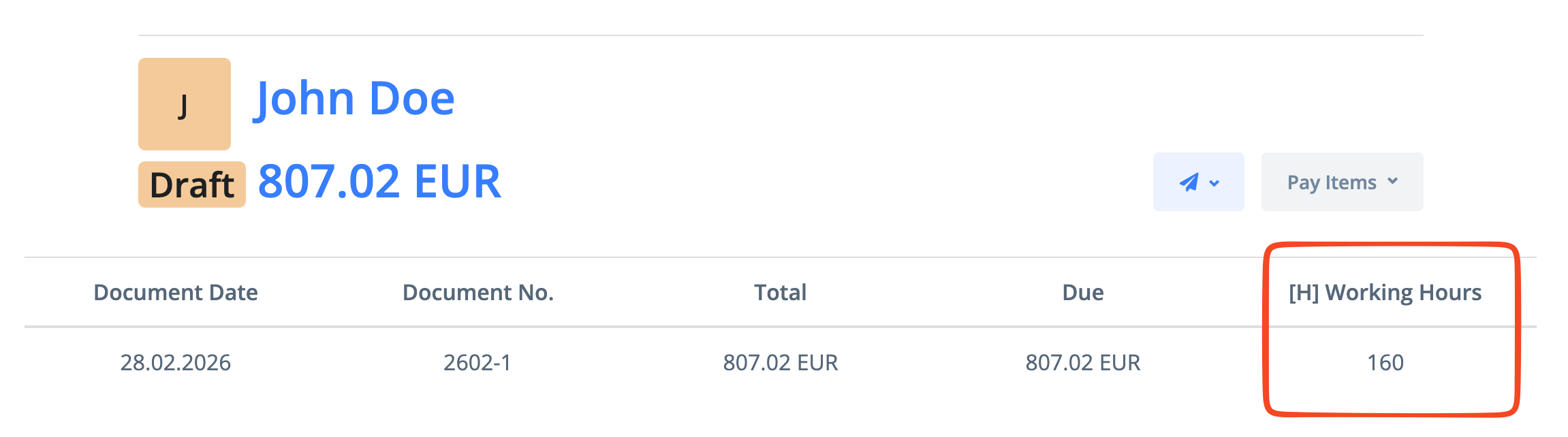
If the timesheet feature is not used, the total working hours can be entered manually.
Calculation Principles
A payroll calculation consists of payroll pay items. Each pay item can have a predefined formula or a fixed amount that automatically populates the calculation when selected. Within the calculation itself, these formulas or fixed amounts can always be manually adjusted.
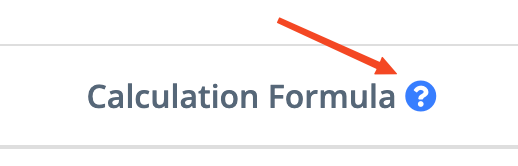
Formulas utilize placeholders. You can check the availability of specific placeholders at any time by opening the tooltip window (clicking on the question mark icon).
At the top of the calculation form, there is an additional information block that displays the values of specific placeholders (showing what values the placeholders will be replaced with if used).
Gross Pay is set in the employee profile; Normal Business Days and Actual Working Days are pulled from the timesheet; and the Average Daily is calculated based on previous payroll runs.

Placeholders
Annual Leave and Sick Pay
To enter annual leave or sick pay, you must add the corresponding payroll pay items to the "Salary" block of the calculation and apply the relevant calculation formulas, or manually enter the pre-calculated amounts.
Advances
To offset paid advances, add the corresponding payroll pay item with the amount of the advance paid to the "Post Tax Deductions" block in the calculation.
Calculation Examples
Formula for calculating a partial month:
R/D*W - Where D (working days) and W (actual days worked) are pulled from the timesheet, and R (Gross Pay) is from the employee profile.
Formula for calculating annual leave:
AVG*DAY(ATV) - Where ATV is the event code for annual leave in the timesheet.
Formula for calculating sick pay:
AVG*(DAY(S75)+DAY(S80)) - Where S75 is the timesheet code for days paid at 75%, and S80 is the timesheet code for days paid at 80%.
Note: The use of formulas is not mandatory, nor is it restricted to a specific format; they can be customized to fit your needs.
Deleting / Reverting to Edit
To delete a payroll run for all employees, click the "Delete" button. A payroll run can only be deleted if all individual employee calculations are in Draft status.
If an employee's calculation has already been posted, it can be reverted for editing. To do this, open the "Journal Entries" section within the payroll calculation, open the specific journal entry, click the "Cancel the approval" button, and then click "Edit document."
Note: If the salary has already been paid, you must first delete the outgoing payment.
Payroll Reports
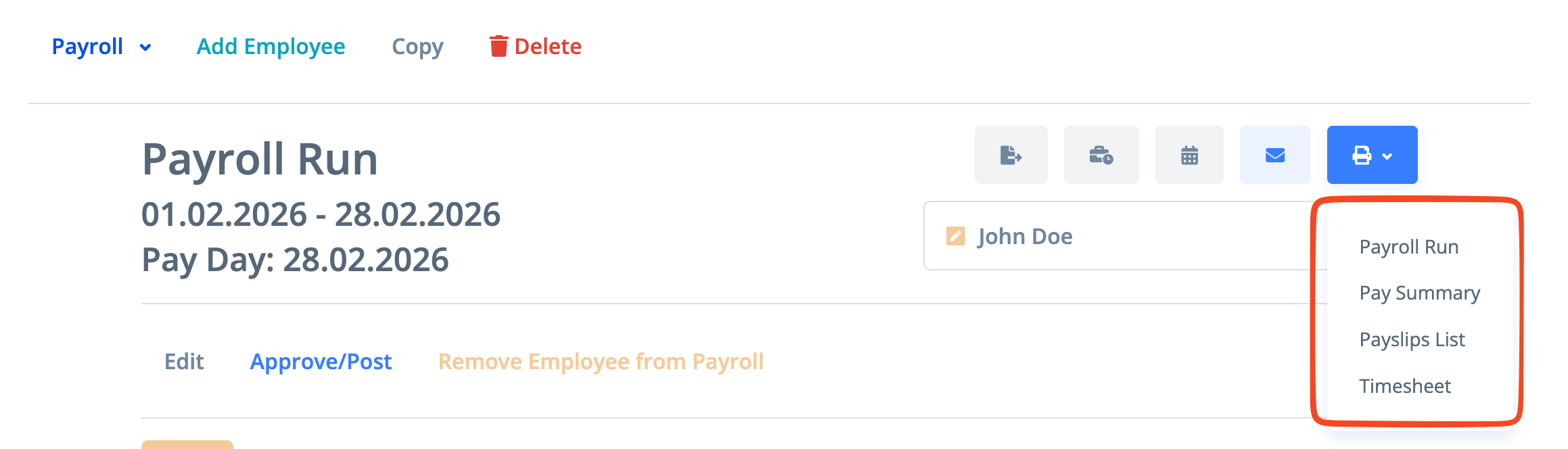
The following reports are available directly from the payroll calculation:
Payroll Run
Pay Summary
Payslips List
Timesheet
Payslips can be sent to employees via email directly from the system.
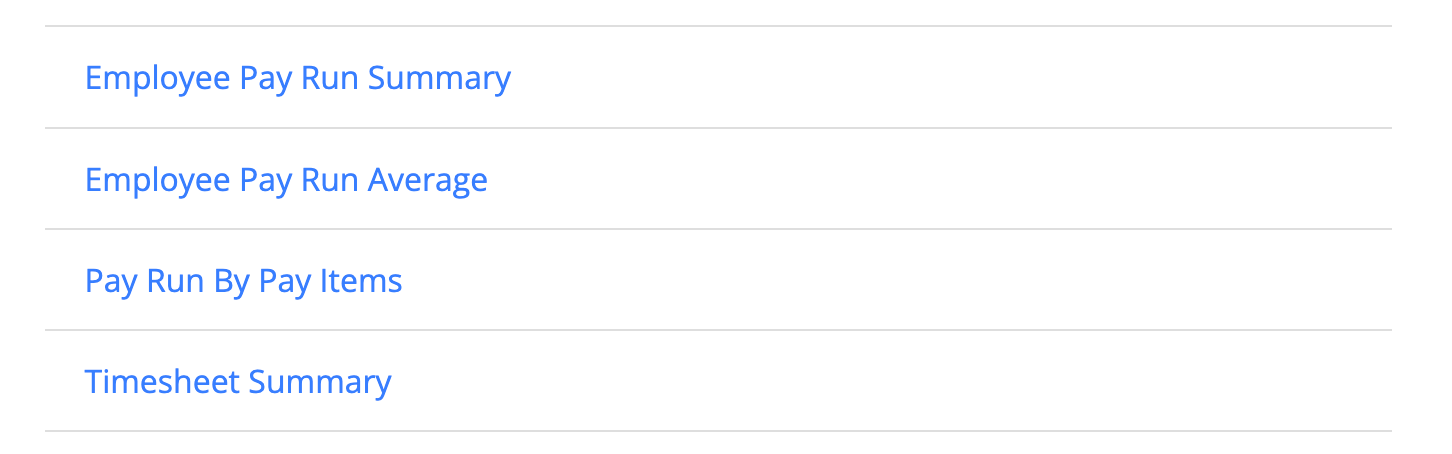
In the Reports -> Accounting section, summary reports covering all payroll runs for a selected period are also available.
Tax Reports (Latvia)
Employer's Report ("Darba devēja ziņojums"): You can download this as an XML file using the export button.
EDS API: If the EDS API is connected, the report can be submitted directly to the State Revenue Service (VID) from the system.

The report is generated for all employees included in the payroll run for the selected period. Therefore, there should only be one payroll run for each specific period to ensure accuracy.